



Key Takeaways
- A tanning ledge typically adds $3,000 to $8,000 to a new fiberglass pool in Central Florida, depending on size, depth, and finishes.
- Standard tanning ledges are 6 to 12 inches deep and 6 to 10 feet wide — large enough for two in-pool loungers and a small umbrella sleeve.
- In Florida's heat, tanning ledges are one of the highest-value pool features because they let you cool off without committing to a full swim.
- Many fiberglass pool models are available with factory-molded tanning ledges, so the ledge arrives as part of the shell rather than being formed on site.
What Is a Tanning Ledge in a Swimming Pool?
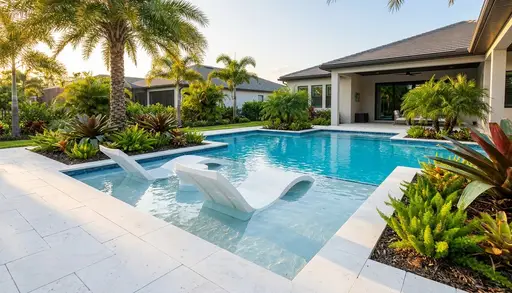
A tanning ledge — also called a sun shelf, Baja shelf, or tanning shelf — is a wide, shallow section of a swimming pool, usually 6 to 12 inches deep, designed for lounging in the water rather than swimming. The ledge sits at one end of the pool and creates a flat, submerged platform where you can place in-pool chairs, kids' toys, or even a small table.
In a fiberglass pool, the tanning ledge is molded directly into the shell at the factory, so it arrives as one continuous piece with the rest of the pool. Homeowners often like that a molded ledge has no separate joint between the ledge and the pool shell.
Tanning ledges have become one of the most-requested features in new pool construction across Marion County and The Villages. For Florida homeowners who want a low-effort way to cool off — especially retirees, families with toddlers, or anyone with a dog — the ledge often gets used more than the deep end.
How Much Does a Tanning Ledge Cost in Central Florida?
Adding a tanning ledge to a new fiberglass pool in the Ocala area typically costs between $3,000 and $8,000, depending on whether you choose a model with a built-in ledge or add features like bubblers, umbrella sleeves, and LED lighting. The ledge itself is usually included in the shell price for Latham models that come with one — the cost difference shows up in the surrounding upgrades.
Here is a typical breakdown for a tanning ledge in Central Florida:
- Built-in ledge on a Latham fiberglass shell: Often included in the base shell price, or a $1,500–$3,000 upgrade depending on model.
- Umbrella sleeve (in-deck or in-ledge): $200–$500. A simple PVC sleeve cast into the shell or deck so you can stake a market umbrella.
- Bubblers (1–2 jets): $800–$1,800 installed. These shoot a small fountain of water from the ledge surface — they're a favorite with kids and add ambient sound.
- LED lighting in the ledge: $400–$1,000. Color-changing LEDs make the ledge a focal point at night.
- In-pool lounge chairs (set of 2): $700–$2,000. Designed to sit submerged on the ledge without floating away.
Adding a tanning ledge to an existing concrete pool during a remodel is generally more expensive — often $6,000 to $15,000 — because it involves structural modification and refinishing work rather than a simple accessory upgrade. Scope, cost, and feasibility vary from pool to pool. If you're considering a major pool renovation, it can make sense to look at a ledge during the same project.
What Size and Depth Should a Tanning Ledge Be?
Most Florida tanning ledges measure between 6 and 10 feet wide, 4 to 6 feet deep (front-to-back), and 6 to 12 inches of water depth. That sizing fits two adult-sized in-pool loungers comfortably, leaves room for a small drink table, and stays shallow enough for toddlers to play safely under supervision.
Water depth is the variable that most affects how the ledge feels:
- 6 inches: The classic "Baja shelf" depth. Loungers sit mostly out of the water with just your legs and lower back submerged. Best for sunbathing and a deeper tan.
- 9 inches: The most popular middle-ground depth in Central Florida. Cool enough on hot days, deep enough for small dogs to wade, shallow enough for small children.
- 12 inches: A deeper ledge that doubles as a wading area. Better for active toddlers and older dogs, but loungers will sit lower in the water.
In Florida's climate, many homeowners land on 9 to 12 inches. Anything shallower can heat up uncomfortably during August and September afternoons, especially if the ledge gets direct sun all day. A slightly deeper ledge stays cooler and gives you more flexibility.
Are Tanning Ledges Worth It for Florida Homeowners?
For most Central Florida pool owners, a tanning ledge is one of the best-value features you can add. Florida averages over 230 days a year with high temperatures above 80°F, and a shallow ledge transforms your pool from a swimming-only space into a daily relaxation spot. You don't need to commit to a full swim — you can step in, sit down, and cool off in 30 seconds.
The ledge becomes especially valuable in three scenarios common to our service area:
- Retirees and active adults in The Villages and Sumter County — A tanning ledge offers low-impact water exposure without the depth or stairs of a full pool entry. Many homeowners use the ledge daily for reading, sipping coffee, or therapeutic soaking.
- Families with young children in Ocala and Belleview — A 9-inch ledge gives toddlers a safe play zone within the pool without needing a separate kiddie pool. Parents can sit on the ledge supervising while staying cool themselves.
- Pet owners — Dogs that won't swim in a deep pool will often happily wade on a tanning ledge. The shallow depth also makes it easier to bathe a pet without lifting them.
From a resale perspective, a tanning ledge is one of the few pool features that consistently shows up in real estate listings as a selling point. In Florida's competitive housing market — particularly around Ocala, Dunnellon, and Crystal River — homes with newer pools that include sun shelves tend to spend less time on the market than similar homes without one.
Which Latham Fiberglass Pools Include Tanning Ledges?
Most modern Latham fiberglass pool models include a built-in tanning ledge as a standard feature. As a Latham dealer, Lucaya Pools installs models like the Catalina, Aspen, and Allure series — all of which offer integrated sun shelves of varying sizes. On these models the ledge is part of the molded fiberglass shell rather than a separately formed structure. Specifications, options, and any applicable warranty coverage are set by the manufacturer and vary by model.
Factory-built fiberglass tanning ledges have a few practical advantages over field-built concrete ledges:
- Smooth gel-coat finish — Comfortable to sit on directly, with no exposed aggregate or rough plaster.
- Non-porous surface — Doesn't trap algae or stain from sunscreen and oils, both of which are constant in Florida summers.
- Pre-plumbed bubbler ports — Many models come with the plumbing already roughed in for bubblers, so you can add them at install or later.
- No separate forming stage — Because the ledge is molded into the shell, it does not add a concrete forming step to a fiberglass pool project.
How to Choose the Right Tanning Ledge Setup
The right tanning ledge setup comes down to how you actually plan to use it. A homeowner who wants to read in the sun every afternoon needs a different layout than a family hosting weekend gatherings or a retiree who wants therapeutic soaking. Walk through your typical day before deciding on size and features.
Questions worth working through before you settle on a design:
- Will you use it daily or occasionally? Daily users benefit from upgrades like umbrella sleeves and bubblers. Occasional users can skip those and save $1,500–$3,000.
- Sun exposure on the ledge? A south-facing ledge in full sun gets hot fast — go deeper (12") and consider an umbrella sleeve. A shaded or east-facing ledge can stay shallower.
- Children or pets? If yes, prioritize a slightly deeper ledge and avoid sharp corner transitions on the ledge edge.
- Year-round or seasonal swimming? If you heat your pool in winter, the ledge becomes a hot-tub-lite zone — invest in good loungers.
- Outdoor kitchen or fire pit nearby? A ledge facing an entertainment area encourages conversation between swimmers and guests on the deck.
If you're still in the planning stage, our team at Lucaya Pools is happy to walk through Latham models and ledge options during an in-home consultation. Call (352) 843-3644 or visit our contact page to schedule a quote — we serve Ocala, The Villages, and the surrounding Marion, Sumter, Lake, Citrus, and Levy County areas.
Frequently Asked Questions
What is a tanning ledge and is it worth it in Florida?
A tanning ledge is a wide, shallow shelf inside a swimming pool — typically 6 to 12 inches deep — designed for lounging in a few inches of water rather than full-depth swimming. In Central Florida's climate, where temperatures stay above 80°F most of the year, tanning ledges are one of the highest-value pool features because they let you cool off quickly without committing to a swim. Most homeowners in Ocala and The Villages use the ledge more than any other part of the pool.
How much does it cost to add a tanning ledge to a fiberglass pool in Ocala?
Adding a tanning ledge to a new fiberglass pool in Ocala typically adds $3,000 to $8,000 to the project, depending on whether you add bubblers, umbrella sleeves, or LED lighting. Latham fiberglass models often include the ledge in the base shell price, so the upgrade cost shows up in the accessories. Adding a ledge to an existing concrete pool during a remodel commonly runs $6,000 to $15,000, since it is structural work rather than an accessory upgrade.
How deep should a tanning ledge be in a Florida pool?
Most Central Florida tanning ledges are 9 to 12 inches deep. A 6-inch "Baja shelf" depth works for pure sunbathing but can heat up uncomfortably during summer afternoons. A 9-inch ledge is the most popular middle ground — cool enough for July and August, shallow enough for small children, and comfortable for in-pool loungers. A 12-inch ledge doubles as a wading area for toddlers and pets.
Can I add a tanning ledge to an existing concrete pool?
Often yes, but it is a significant project. Adding a tanning ledge to an existing concrete pool generally involves structural modification and refinishing work, and what is possible depends on the specific pool. Costs commonly run $6,000 to $15,000 in the Marion County area. Homeowners frequently look at it as part of a larger pool renovation. A licensed contractor should evaluate your pool before you plan the work.
Do tanning ledges need any special maintenance?
Tanning ledges in fiberglass pools require almost no extra maintenance compared to the rest of the pool. The smooth gel-coat surface resists algae and staining, and the shallow water circulates with the main pool. The only routine tasks are wiping the ledge surface occasionally to remove sunscreen residue and brushing it during your weekly pool care. Bubblers should be flushed periodically to prevent mineral buildup, especially in Central Florida's hard-water areas.
This article is general educational information about pool ownership. It does not describe the methods, specifications, or warranties of Lucaya Pools. Construction and installation practices vary by site and follow the pool manufacturer's specifications.