




Quick Answer: Which Pool Filter Is Best for You?
If you’re short on time, here’s the decision snapshot before diving into details.
Sand filters are best for large pools, high-use family settings, or budget-conscious owners who want simple, low-cost operation. They deliver decent clarity with minimal fuss.
Cartridge filters are best for small to medium residential pools and spas where water conservation matters and you want finer filtration without complex maintenance.
DE filters are best for owners who demand the clearest possible water and don’t mind higher costs and more frequent upkeep.
Quick decision based on priorities:
Lowest initial cost → Sand
Lowest maintenance effort → Sand or Cartridge
Best water clarity → DE
Water-saving (no backwashing) → Cartridge
Simplest winterizing → Cartridge
Read the detailed sections below to confirm your choice and check sizing requirements before purchasing.
How Pool Filters Work in Your Circulation System
Understanding the circulation loop helps you appreciate why filter selection matters. Water flows from your pool through skimmers and main drains, gets pushed by the pool pump into the filter tank, then optionally passes through heaters or chlorinators before returning via return jets.
Here’s the key distinction: chlorine and other sanitizers kill germs and pathogens. Your filter removes dirt, debris, and particles trapped in the water. Both work together—one doesn’t replace the other.
Filtration fineness is measured in microns. A micron rating tells you the smallest particle size the filter can capture. For reference, a human hair measures about 50-70 microns, fine beach sand runs 100-500 microns, and some bacteria are under 1 micron. Most residential pool filters target 2-40 microns to balance clarity against proper water flow and reasonable maintenance demands.
All three filter types can keep a pool safe when properly sized and maintained. The differences show up in water clarity to the naked eye, maintenance frequency, and operating costs. An undersized or dirty filter increases pump strain, drives up energy costs, and often causes cloudy water.
Main Types of Pool Filters
All common residential filter systems fall into three categories: sand, cartridge, and diatomaceous earth (DE). Each type uses different filter media and cleaning methods, offering distinct trade-offs in filtration efficiency, cost, and maintenance.
High-level comparison:
Sand filters: 20-40 micron range, lowest initial cost, easiest to operate via waste water backwashing
Cartridge filters: 10-15 micron range, no backwashing required, good for water conservation
DE filters: 2-5 micron range, highest clarity, most maintenance and regulatory considerations
Sand Pool Filters
Sand pool filters use a large filter tank filled with #20 silica sand—typically 200-350 pounds for residential inground units. Water enters the top, flows downward through the sand bed, and exits through slotted laterals at the bottom. As water passes through, the rough edges of sand grains trap debris through mechanical straining.
Sand filters trap contaminants in the 20-40 micron range. This handles most visible debris well, though ultra-fine particles like pollen or dead algae may pass through, occasionally causing slight haziness. For most family pools, water appears clear enough to the naked eye.
Key advantages:
Lowest upfront cost among all types ($400-800 for typical residential models)
Very simple operation using a multi port valve for backwashing
No need to open the tank for routine cleaning
Pool filter sand lasts 5-7 years before requiring replacement when properly cared for
Excellent dirt-holding capacity for large pools and ground pools
Main drawbacks:
Coarser filtration compared to other filters; may struggle with fine dust
Frequent backwashing wastes 500-2,000 gallons per cycle (problematic in drought areas)
Sand grains gradually round off, reducing filtration efficiency over time
Maintenance routine:
Watch the pressure gauge; backwash when pressure rises 8-10 psi above your clean reading
Inspect laterals annually (sand returning to pool signals cracked laterals)
Replace sand every 5-7 years, costing roughly $20-50 per 50-pound bag
Best for: Large family pools, rental properties, or owners who prefer a low maintenance approach with occasional backwashing rather than hands-on filter cleaning.
Cartridge Pool Filters
A cartridge pool filter uses pleated polyester filter media inside a cylindrical tank. Water is forced through the pleats, which trap debris across a large surface area—often 50-300+ square feet per element. Unlike sand, a cartridge filtration system requires no backwashing.
Cartridge filters typically achieve 10-15 micron filtration, yielding noticeably clearer pool water than sand, especially in sunny residential settings where fine particles like sunscreen and body oils accumulate.
Key advantages:
No water waste from backwashing—ideal for drought-prone regions
Lower operating pressure and better energy efficient operation
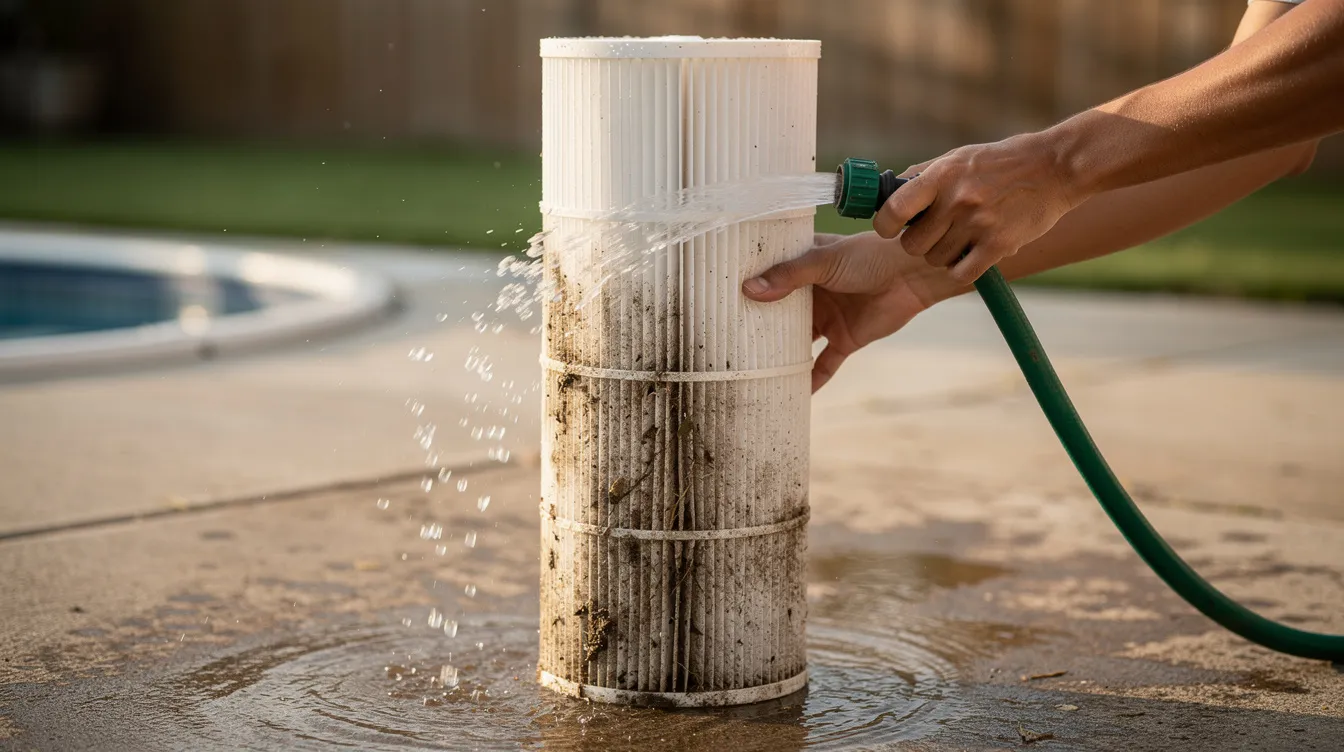
Easy cleaning: shut off pump, open tank, remove filter cartridges, rinse with a garden hose
Works well with variable-speed pumps that benefit from smoother hydraulics
Main drawbacks:
Higher initial cost ($500-1,500) than comparable sand filters
Replacement cartridges cost $100-400 per set every 2-5 seasons
Cleaning can be messy after storms or in leafy backyards
Neglected cartridges can clog and collapse, requiring immediate replacement
Maintenance routine:
Rinse when pressure gauge shows 8-10 psi above baseline
Perform deep cleaning with chemical soaks annually to remove dirt, oils, and scale
Replace based on hours of operation and condition, not just calendar age
Best for: Small to medium inground pools, above-ground pools, and cartridge pool systems in water-restricted areas where backwash restrictions apply.
Diatomaceous Earth (DE) Pool Filters
DE pool filter systems deliver the finest filtration available for residential pools. They use a grid or finger assembly coated with a thin layer of DE powder—a chalk-like substance made from fossilized diatom skeletons. This premium filter media creates a porous surface that captures particles as small as 2-5 microns.
The result? Water sparkling clean enough to notice the difference under strong sunlight, especially in light-colored plaster pools.
Key advantages:
Best visual water clarity among all filter types
Captures smaller particles that sand and cartridge systems miss
Quick recovery from cloudy water after heavy bather loads or storms
Some models include “bump” mechanisms to extend cycles between cleanings
Main drawbacks:
Highest initial cost ($800-2,000) plus ongoing DE powder expenses
More frequent maintenance cycles than other filters
Handling diatomaceous earth requires care—fine powder is harmful if inhaled
Local codes may restrict discharge into storm drains
Maintenance routine:
Monitor pressure gauge; backwash at 8-10 psi above baseline, then recharge with DE slurry through the skimmer
Perform at least one full teardown per season to hose down grids and check for tears
Wear a mask and gloves when handling dry DE powder
Follow local disposal regulations for waste DE
Best for: High-end residential pools, owners who prioritize resort-level clarity, or pools in dusty/pollen-heavy environments where other filters struggle.
Matching Filter Type to Your Pool and Lifestyle
No single filter is the best pool filter for everyone. Your choice depends on pool size, environment, budget, and how involved you want to be in maintenance.
Pool characteristics to consider:
Above-ground pools (10,000-20,000 gallons): 19-24 inch sand filters or single large cartridge filters work well
Inground pools (15,000-40,000 gallons): 24-36 inch sand, multi-cartridge, or 36-48 sq ft DE filters
Environmental factors:
Wooded yards with heavy leaf fall benefit from sand’s high dirt-holding capacity
Dusty, windy, or pollen-heavy areas may need DE’s fine filtration to trap debris and maintain clarity
Long swimming seasons demand more filtration hours and favor low maintenance options
Owner lifestyle considerations:
Busy families often prefer sand’s simple backwashing over cartridge cleaning
Detail-oriented owners who want crystal clarity typically choose DE despite extra upkeep
Water-conscious homeowners in drought regions lean toward cartridges to eliminate water backwashing entirely
Correctly Sizing Your Pool Filter
Filter sizing matters as much as filter type. An undersized filter clogs quickly, reduces flow rate, and strains the pump. An oversized filter is more forgiving and requires less frequent cleaning.
Basic sizing principle: Your filter should handle at least one full turnover of pool volume every 6-8 hours. Calculate required gallons-per-minute (GPM) by dividing pool gallons by turnover time in minutes. A 20,000-gallon pool needs roughly 40-80 GPM for adequate filtration.
Filter ratings to check:
Maximum GPM (should meet or exceed your pump’s output)
Surface area in square feet (for cartridge and DE)
Flow velocity limits (sand filters under 20 GPM per square foot of bed area)
Rule of thumb: Choose a filter 20-25% larger than minimum requirements. This reduces maintenance frequency and provides a buffer for higher flow rate demands during hot weather.
Always record the clean pressure reading after installation. Use the 8-10 psi increase as your universal signal for cleaning or backwashing—this applies to all three filter types.
Installation, Operation, and Maintenance Basics
Professional installation is recommended for inground systems, but understanding basic operation helps you maintain the filter system properly.
Installation considerations:
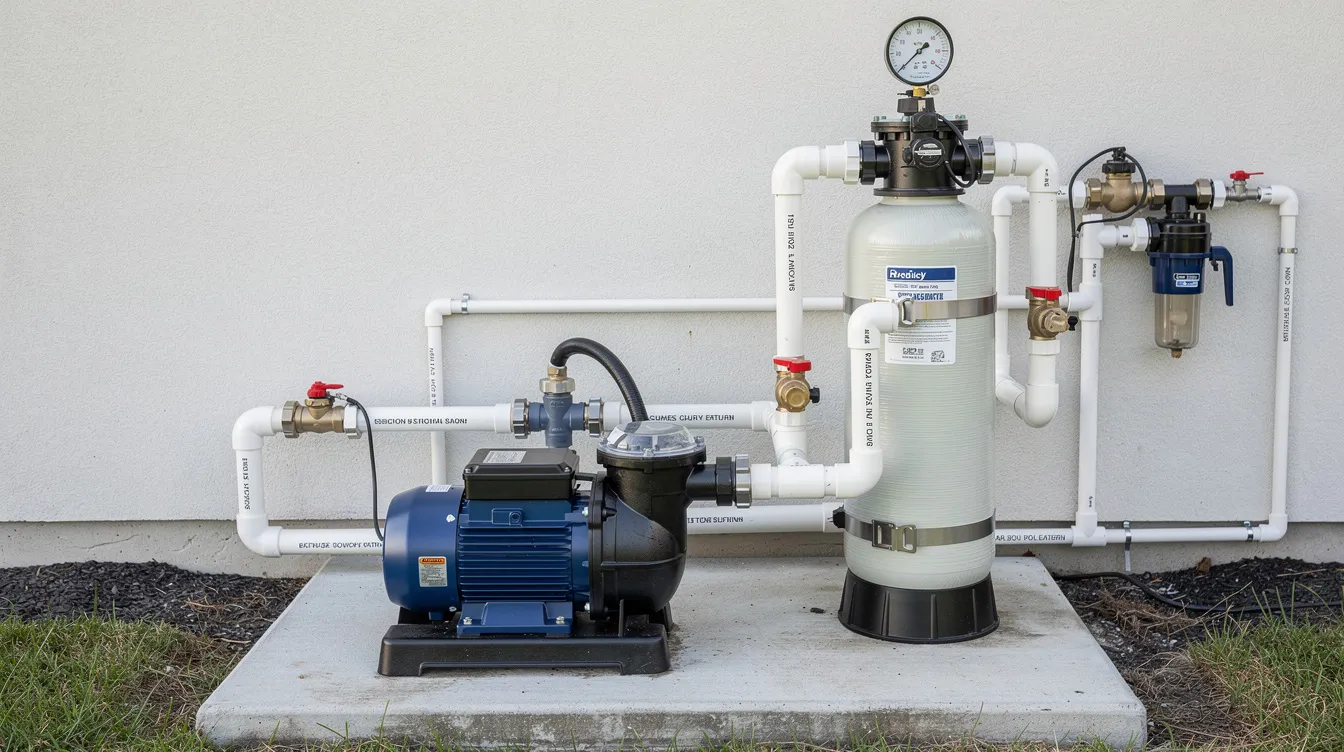
Position pump before filter on a stable pad
Include isolation valves and drain access for service
Match plumbing orientation to filter type (top-mount vs side-mount for sand; vertical positioning for cartridges)
Everyday operation tips:
Run the pump enough hours daily for at least one full turnover (often 8-12 hours in summer)
Check pressure gauge weekly during peak season
Adjust runtime based on bather load and weather conditions
Seasonal tasks:
Spring: Inspect filter body, valves, and gauge; refresh media before starting the season
Fall: Winterize lines, drain filter tanks, protect components from freezing where applicable
Simple troubleshooting:
Cloudy water despite balanced chemistry often signals a dirty filter or undersized system
Low pressure suggests suction-side blockages (check skimmer baskets)
High pressure indicates dirty media or return-side obstructions
Cost Comparison and Long-Term Value
Understanding both purchase price and ongoing costs helps you find the right filter for your budget.
Purchase price ranges (2024-2026):
Sand filters: $400-1,200
Cartridge filters: $500-1,500
DE filters: $800-2,500
Ongoing media costs:
Sand: $20-50 per 50-pound bag; replacement every 5-7 years
Cartridges: $100-400 per set; replacement every 1-3 years
DE powder: $20-40 per 10-25 pound bag; used after each backwash
Long-term ownership factors:
Sand wastes $50-200/year in water and energy from frequent backwashing
Cartridges save water but accumulate $100-300/year in replacement costs
DE minimizes need for clarifiers but incurs $300-600/year in powder and maintenance
Better filtration can reduce chemical additive needs, and larger quality filters extend pump and heater life by reducing strain. Factor in local water rates and discharge regulations when comparing “cheap to buy” versus “cheap to own” over 5-10 years.
Key Takeaways: Choosing the Right Pool Filter Type
Core differences at a glance:
| Filter Type | Micron Range | Initial Cost | Maintenance Style |
|---|---|---|---|
| Sand | 20-40 | Lowest | Backwashing |
| Cartridge | 10-15 | Medium | Manual cleaning |
| DE | 2-5 | Highest | Backwash + recharge |
The best filter choice hinges on your pool size, local environment, discharge regulations, and willingness to perform routine maintenance. Sand offers simplicity and low cost. Cartridge provides finer filtration without water waste. DE delivers unmatched clarity for those willing to invest time and money.
Before you buy:
Confirm proper sizing based on pool volume and pump output
Plan a maintenance schedule tied to pressure readings
Remember that water chemistry and filtration work together—neither replaces the other
Once the right filter type is installed and properly cared for, keeping your pool clean becomes a predictable routine rather than a guessing game. Record your clean pressure reading on installation day, commit to regular checks, and your filter will reward you with consistently clear, inviting water season after season.