


Key Takeaways
- Fiberglass pools cost less to own over time, install in weeks instead of months, and hold up exceptionally well in Florida's heat and humidity — making them the top choice for most Central Florida homeowners.
- Concrete (gunite) pools offer unlimited shape and size customization but require resurfacing every 10–15 years and higher ongoing chemical and maintenance costs.
- A fiberglass pool typically installs in 3–6 weeks, while a concrete pool often takes 3–6 months from dig to first swim.
- For Ocala, The Villages, and Marion County yards with standard access, fiberglass usually wins on total cost of ownership; concrete makes sense mainly for oversized or highly custom designs.
Fiberglass vs. Concrete Pools: The Short Answer for Florida
For most Central Florida homeowners, a fiberglass pool is the better long-term investment. Fiberglass shells install in a fraction of the time, resist algae and staining in Florida's heat, and cost significantly less to maintain than concrete. Concrete pools win only when you need a shape, depth, or size that no manufactured shell offers.
Both are excellent, durable pools — this isn't a case of good versus bad. It's a question of matching the right construction method to your yard, your budget, and how you plan to use the pool over the next 20 years. In the Ocala and Marion County market, the vast majority of new inground pools we see are fiberglass, and for good reason.
How Fiberglass and Concrete Pools Are Built
The core difference is manufacturing. A fiberglass pool is a single-piece shell molded in a factory, cured under controlled conditions, and delivered ready to set into an excavated hole. A concrete pool — also called gunite or shotcrete — is built entirely on-site by spraying a concrete mixture over a steel rebar framework, then finishing it with plaster, aggregate, or tile.
That distinction drives nearly every practical difference between the two. Because a fiberglass shell arrives complete, crews can install it in a few weeks. A concrete pool is essentially constructed from scratch in your backyard, layer by layer, with multiple cure times that stretch the timeline. Lucaya Pools installs Latham fiberglass shells, the leading US manufacturer, which offers dozens of shapes with limited lifetime structural warranties.
Surface and finish
Fiberglass pools have a smooth, non-porous gelcoat surface that resists algae, feels soft underfoot, and rarely needs acid washing. Concrete pools have a rougher, porous surface that provides a grip but harbors algae more easily and can be abrasive on feet and swimsuits. The porosity is also why concrete demands more chemicals to keep balanced.
Cost Comparison: Upfront and Lifetime
Upfront pricing between the two is often closer than people expect — a complete fiberglass pool in Central Florida runs roughly $45,000–$85,000, and a comparable concrete pool typically starts around $55,000 and climbs quickly with custom features. The bigger gap shows up over the life of the pool.
Fiberglass wins decisively on lifetime cost of ownership. A concrete pool needs resurfacing every 10–15 years at a cost of $10,000–$20,000, plus higher electricity for longer filtration cycles and more chemicals to fight its porous surface. Fiberglass pools skip the resurfacing entirely and use noticeably fewer chemicals year after year. Over 20 years in Florida, those savings frequently add up to tens of thousands of dollars.
- Fiberglass: Higher predictability, no resurfacing, lower chemical and energy costs, faster payback.
- Concrete: Higher long-term maintenance, periodic resurfacing, but unlimited design freedom.
If you're weighing detailed numbers for either option, our guide on pool renovations and remodels also breaks down when resurfacing an existing concrete pool makes sense versus building new.
Which Pool Handles Florida's Climate Better?
Fiberglass generally handles Florida's climate better. Its non-porous surface resists the algae growth that thrives in year-round heat and humidity, and the flexible shell tolerates the shifting sandy and clay soils common across Marion, Sumter, and Lake counties. Concrete pools perform well too, but demand more vigilance during our long swim season.
Central Florida pools run essentially year-round, which means more sunlight hours, more heat, and more chances for algae to take hold. The smooth gelcoat on a fiberglass pool gives algae far less to cling to, translating into less scrubbing and fewer chemical corrections during the hottest months. In areas with expansive clay soils around Ocala and Belleview, a fiberglass shell's slight flexibility can also be an advantage over rigid concrete, which is more prone to cracking under ground movement.
Hurricane and storm considerations
Both pool types weather Florida storms well when properly built and permitted. The key is never draining a pool ahead of a hurricane — the water weight anchors the shell against saturated, high-water-table ground. A licensed contractor will engineer the deck, drainage, and bonding to local code, which matters far more than the shell material itself when a storm rolls through Central Florida.
When Concrete Is Still the Right Choice
Concrete makes the most sense when your vision exceeds what a manufactured shell can deliver. Because it's formed on-site, a gunite pool can be built to virtually any shape, depth, or size — think oversized geometric designs, vanishing edges, extreme depths for diving, or fully custom freeform layouts that wrap around unique terrain.
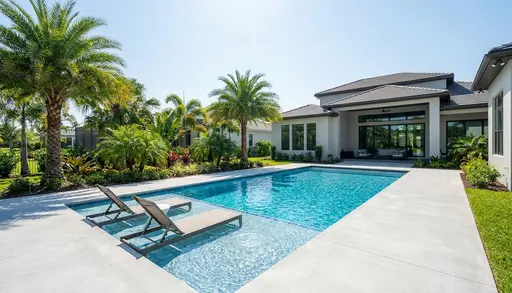
Fiberglass shells come in dozens of shapes and sizes, and for the overwhelming majority of Central Florida backyards, one of those designs is an ideal fit — often including built-in tanning ledges, benches, and spa additions. But if you're set on a truly one-of-a-kind design or a pool larger than about 16×40 feet, concrete may be the only way to achieve it. That's the trade-off: total design freedom in exchange for a longer build and higher long-term upkeep.
Making the Decision for Your Ocala Home
Start by clarifying three things: your budget over the next 20 years (not just day one), how quickly you want to be swimming, and whether a standard shell shape fits your yard and lifestyle. For most homeowners in Ocala, The Villages, and the surrounding counties, those answers point to fiberglass — faster to install, cheaper to own, and beautifully suited to Florida living.
A reputable local builder will walk your property, assess soil and access, and give you an honest recommendation rather than pushing one product. As a licensed FL pool contractor (CPC1460779), BBB-accredited, and PHTA member, Lucaya Pools has spent decades helping Central Florida families choose between fiberglass, vinyl, and concrete based on what actually fits their home. Ready to compare options for your yard? Contact our team or call (352) 843-3644 for a straightforward consultation. Financing is available — see our pool financing options to explore monthly payments.
Frequently Asked Questions
Is a fiberglass pool better than concrete in Florida?
For most Florida homeowners, yes. Fiberglass pools install in weeks instead of months, resist algae in Florida's heat thanks to a non-porous surface, and cost far less to maintain because they never need resurfacing. Concrete is better only when you need a fully custom shape or size a manufactured shell can't provide.
How long does fiberglass pool installation take in Central Florida?
A fiberglass pool typically takes 3–6 weeks from excavation to first swim in the Ocala and Marion County area, depending on permitting and site conditions. A comparable concrete pool usually takes 3–6 months because it is built and cured on-site in multiple stages.
Do fiberglass pools cost less than concrete pools?
Upfront costs are often similar, but fiberglass pools cost significantly less over their lifetime. Concrete pools require resurfacing every 10–15 years at $10,000–$20,000, plus more chemicals and energy. A fiberglass pool skips resurfacing and uses fewer chemicals, often saving tens of thousands of dollars over 20 years in Florida.
Can I convert my concrete pool to fiberglass in Ocala?
A true one-piece fiberglass shell cannot be dropped into an existing concrete pool, but you can renovate a concrete pool with a fiberglass-like finish or resurface it for a fresh, low-maintenance surface. A local builder can assess whether resurfacing or a full rebuild makes more sense for your Central Florida pool.
Which pool surface is best for Florida's heat and algae?
A fiberglass gelcoat surface is generally best for Florida because it is smooth and non-porous, giving algae little to cling to during our year-round swim season. This means less scrubbing, fewer chemicals, and a surface that stays comfortable underfoot even in Central Florida's intense summer heat.